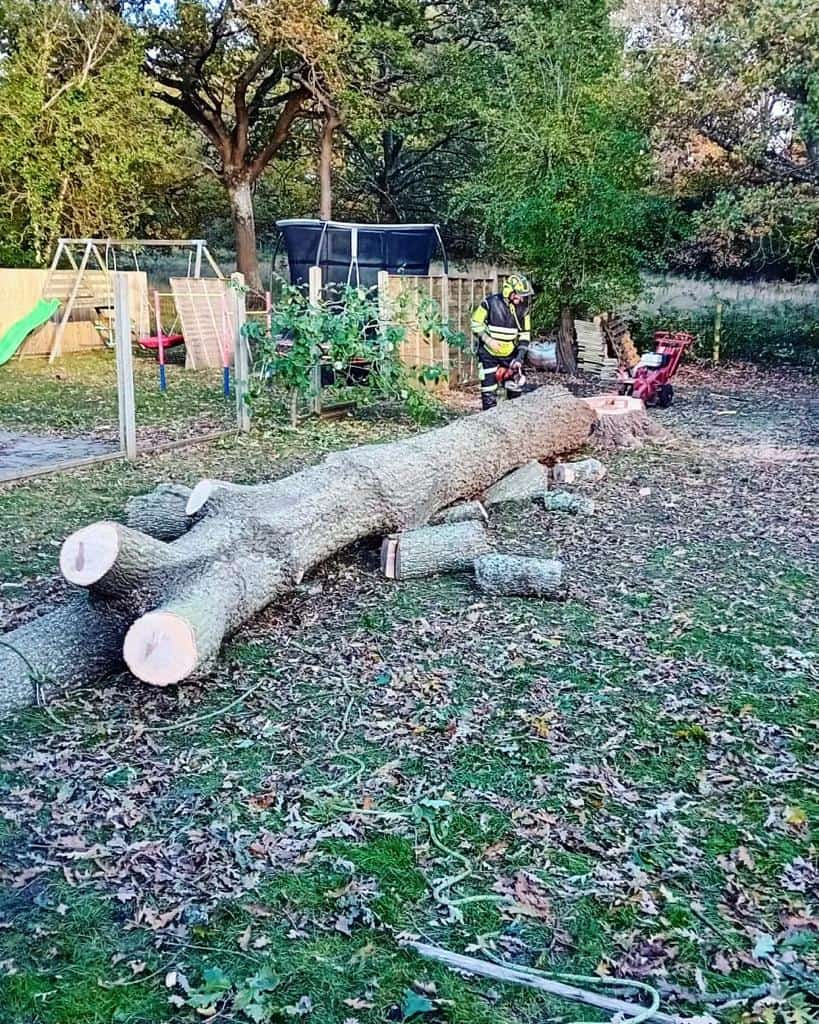
Trees contribute to the appearance, shade and natural character of a garden, but their condition can change as they age or become affected by disease. A tree with significant decay, extensive dead branches or an unstable trunk may eventually become a safety concern, particularly when it stands close to a home, driveway or frequently used outdoor area.
For property owners in Keynsham, Bristol, recognising the warning signs of a dead or diseased tree can help determine when professional tree surgery is needed. While some trees can be managed through pruning or other treatments, others may require removal if their condition presents an unacceptable risk.
Common Signs of a Dead or Diseased Tree
Extensive Dead Branches
Dead branches are among the most noticeable signs that a tree may be struggling. They may have brittle bark, lack leaves during the growing season or snap easily compared with healthy branches. Dead wood can also accumulate within the canopy, particularly when a tree is affected by disease, environmental stress or age-related decline.
A few dead branches do not necessarily mean the entire tree needs to be removed. Targeted pruning may be sufficient if the trunk and main structure remain healthy. However, widespread dead branches throughout the canopy may indicate a more serious problem that requires a professional assessment.
Removing hazardous dead wood can reduce the risk of falling branches, while an inspection helps establish whether the tree can safely remain in place.
Fungal Growth Around the Trunk or Roots
Mushrooms or bracket fungi growing on a tree’s trunk, major branches or around its base may indicate fungal activity within the wood. Some fungi contribute to internal decay, potentially weakening the tree’s structural integrity.
Visible fungal growth does not always mean a tree is immediately dangerous, and different species affect trees in different ways. However, growth around the roots or lower trunk deserves particular attention because these areas play an important role in supporting the tree.
A tree surgeon can assess the visible symptoms, surrounding conditions and structural features to determine whether further investigation or removal is appropriate.
Cracks, Cavities and Decaying Wood
Deep cracks in the trunk, large cavities and areas of soft or deteriorating wood can indicate structural weakness. Damage may develop after storms, previous branch failures, injuries or prolonged exposure to moisture.
Not every hollow tree requires removal. Some trees can remain stable despite having cavities, depending on their overall structure and the extent of decay. The concern increases when defects affect important supporting sections or occur alongside other warning signs.
Professional assessment helps establish whether the tree can be managed safely or whether its condition makes removal the more suitable option.
Leaning or Changes in Stability
A tree that has developed a new lean may be experiencing root damage, soil movement or structural failure. Other warning signs include raised soil around the base, exposed roots, fresh cracks in the ground or movement following strong winds.
Some trees naturally grow at an angle, so a lean alone is not proof that removal is necessary. A sudden change in position or signs of root plate movement, however, should be taken seriously.
If a tree appears unstable, keep people away from the surrounding area and arrange a professional assessment promptly. Do not attempt to pull, brace or cut the tree yourself.
Unusual Changes in Leaves and Bark
Discoloured leaves, premature leaf loss, thinning branches and patches of dying bark can indicate that a tree is under stress. Possible causes include disease, pests, poor growing conditions, root damage or prolonged moisture problems.
These symptoms do not automatically mean the tree is dying. Some conditions can be managed through appropriate care, while others may cause progressive decline.
The pattern and extent of the symptoms matter. If deterioration continues over several seasons or affects a large proportion of the canopy, a tree surgeon can help identify the likely cause and recommend suitable action.
When Is Tree Removal Necessary?
Tree removal may be appropriate when a tree has extensive structural decay, severe disease, major root failure or widespread decline that cannot be managed effectively. Its location is also important. A weakened tree near a house, garden path or parking area may present a greater risk than one in an open space.
However, removal should not be based on a single symptom alone. The tree’s species, age, overall structure, condition and surroundings all influence the decision. In some cases, pruning, dead wood removal or ongoing monitoring may be sufficient.
A professional assessment helps determine the most appropriate approach, balancing safety with the possibility of retaining a healthy or manageable tree.
Why Early Assessment Matters
Waiting until a tree shows severe deterioration can make it harder to manage safely. Dead branches may fall without warning, while hidden decay or root problems can progress before obvious external signs appear.
Regular inspections are particularly useful for mature trees, trees showing changes in condition and those situated near buildings or areas used frequently by people. After severe weather, it is also sensible to look for broken branches, new cracks or signs of movement from a safe distance.
If you notice significant damage, avoid climbing the tree or carrying out work at height. A qualified tree surgery professional has the knowledge and equipment to assess the condition and plan suitable work.
Professional Tree Surgery in Keynsham, Bristol
EM Tree Surgery Keynsham helps property owners address concerns involving dead, diseased or potentially unsafe trees. Following an assessment, suitable options may include pruning, dead wood removal or complete tree removal where the condition and surrounding risks justify it.
Whether you have noticed fungal growth, extensive dead branches, trunk damage or a sudden change in stability, obtaining professional advice can help you understand the next steps.
If you are concerned about a tree on your property, contact EM Tree Surgery Keynsham to arrange an assessment in Keynsham, Bristol.
Conclusion
Dead and diseased trees can show several warning signs, including extensive dead branches, fungal growth, decaying wood, unusual leaning and persistent changes in foliage. While these symptoms do not always mean removal is necessary, they should be assessed when they suggest declining health or structural weakness.
For property owners in Keynsham, Bristol, early professional advice can help identify whether a tree can be managed through pruning or requires removal to address safety concerns. EM Tree Surgery Keynsham can assess the condition of your tree and recommend a suitable course of action to help keep your outdoor space safe and well maintained.
Call us on: 0117 463 1711
Click here to find out more about EM Tree Surgery Keynsham
Click here to complete our contact form and see how we can help with your tree needs.