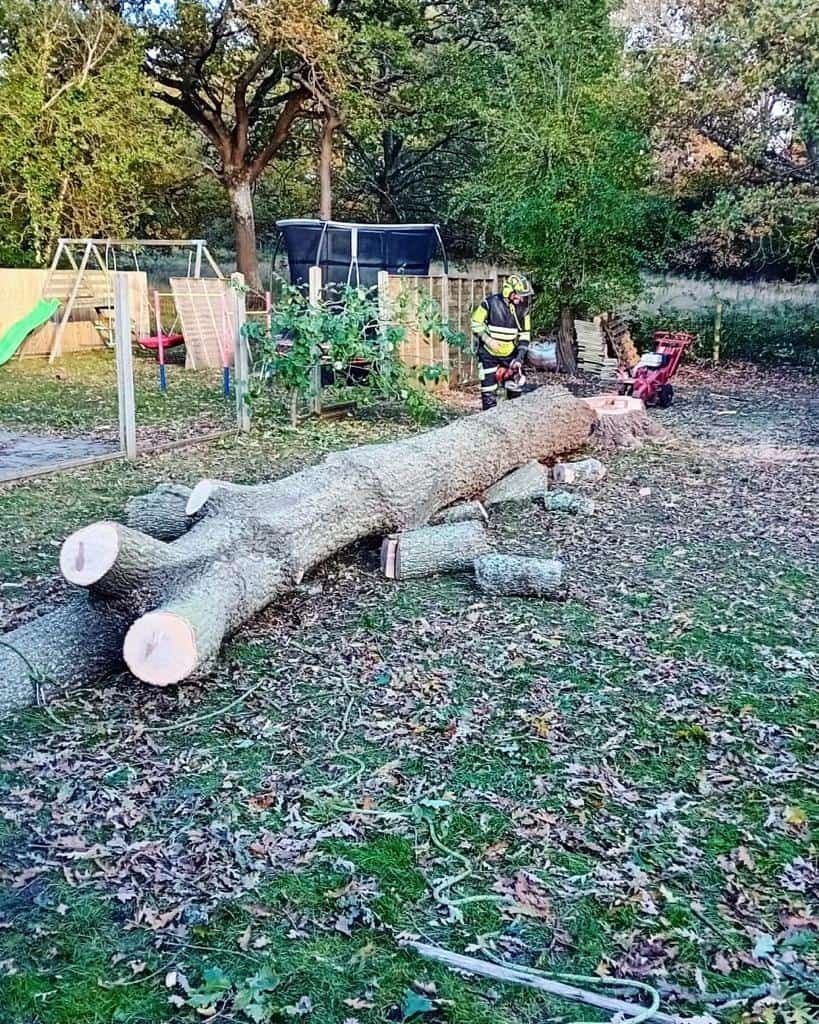
Trees can provide shade, privacy, wildlife habitat and visual appeal, but as they grow, their size and shape may sometimes need to be managed. When a tree has become too large for its surroundings, crown reduction can be an effective form of professional tree care.
Crown reduction involves carefully reducing the overall size and spread of a tree while maintaining its natural shape and structure. For property owners in Keynsham, Bristol, understanding when this work may be appropriate can help keep trees healthy, balanced and better suited to their surroundings.
What Is Crown Reduction?
Crown reduction is a tree surgery technique used to reduce the height and/or overall spread of a tree. Rather than simply cutting the top of the tree, a professional tree surgeon selectively removes branches throughout the crown.
The aim is to create a smaller, balanced crown while retaining the tree’s natural appearance. Cuts should be carefully positioned to avoid unnecessary damage and to encourage healthy future growth.
Crown reduction is different from topping or excessive cutting, which can leave large wounds and create an unnatural structure. Proper reduction focuses on controlled branch removal and maintaining the tree’s overall form.
When Might a Tree Need Crown Reduction?
There are several situations where crown reduction may be considered. One common reason is when a tree has grown beyond the space available for it.
Signs that reduction may be appropriate include:
- A crown becoming too large for its surroundings
- Branches extending significantly over a property
- Excessive growth towards buildings or other structures
- A tree becoming visually unbalanced
- Dense growth creating concerns about clearance
- A tree requiring better clearance from nearby areas
The decision should be based on the individual tree rather than simply its size. Species, age, condition, structure and growing environment all need to be considered.
How Crown Reduction Can Help
A carefully planned crown reduction can bring the size of a tree back into proportion with its surroundings. It can also help manage branches that have grown into unsuitable areas.
Reducing the crown may improve clearance around buildings, paths and other parts of a property. It can also help maintain a more balanced structure when growth has become uneven.
However, crown reduction should not be used simply as a routine way of keeping every tree small. Trees need their foliage to support healthy growth, so removing too much canopy can place unnecessary stress on the tree.
Why Professional Assessment Matters
Trees respond to pruning in different ways. Removing the wrong branches, making excessive cuts or reducing the crown too heavily can affect the tree’s structure and future growth.
A professional assessment considers the condition and natural shape of the tree before deciding whether crown reduction is suitable. The work can then be planned around the tree’s existing structure rather than applying the same pruning method to every tree.
This is particularly important for mature trees, where large branches and established growth patterns require careful consideration.
Crown Reduction vs Crown Thinning
Crown reduction and crown thinning are different pruning techniques.
Crown reduction reduces the overall dimensions of the tree by shortening selected branches throughout the crown. Crown thinning, by comparison, involves selectively removing some branches to reduce density while generally maintaining the tree’s overall size and shape.
Choosing the right technique depends on the objective. If a tree has become too large, reduction may be considered. If the main concern is excessive density, thinning may be more appropriate.
A professional tree surgeon can assess the tree and recommend the most suitable approach.
What Happens During Crown Reduction?
Before work begins, the tree should be assessed to identify its main branches, existing structure and areas requiring attention. The reduction is then carried out selectively rather than removing large sections indiscriminately.
Branches are shortened at suitable points to help maintain a natural appearance. The amount removed should be appropriate for the species, condition and size of the tree.
The finished result should look balanced rather than heavily cut back, with enough healthy crown remaining to support continued growth.
Crown Reduction in Keynsham, Bristol
For property owners in Keynsham, Bristol, EM Tree Surgery Keynsham provides professional tree surgery services, including crown reduction.
If you have a tree that has become too large for its surroundings, is growing towards a property or requires better clearance, a professional assessment can establish whether crown reduction is suitable.
Contact EM Tree Surgery Keynsham to arrange an assessment and discuss the appropriate tree surgery for your property.
Conclusion
Crown reduction is a controlled tree surgery technique designed to reduce the overall size and spread of a tree while preserving its natural structure. It can be useful where growth has become excessive or where a tree is no longer well suited to its surroundings.
The key is to avoid excessive pruning and ensure that any reduction is planned around the individual tree. With professional assessment and careful work, crown reduction can help manage tree growth while supporting its long-term condition.
Call us on: 0117 463 1711
Click here to find out more about EM Tree Surgery Keynsham
Click here to complete our contact form and see how we can help with your tree needs.