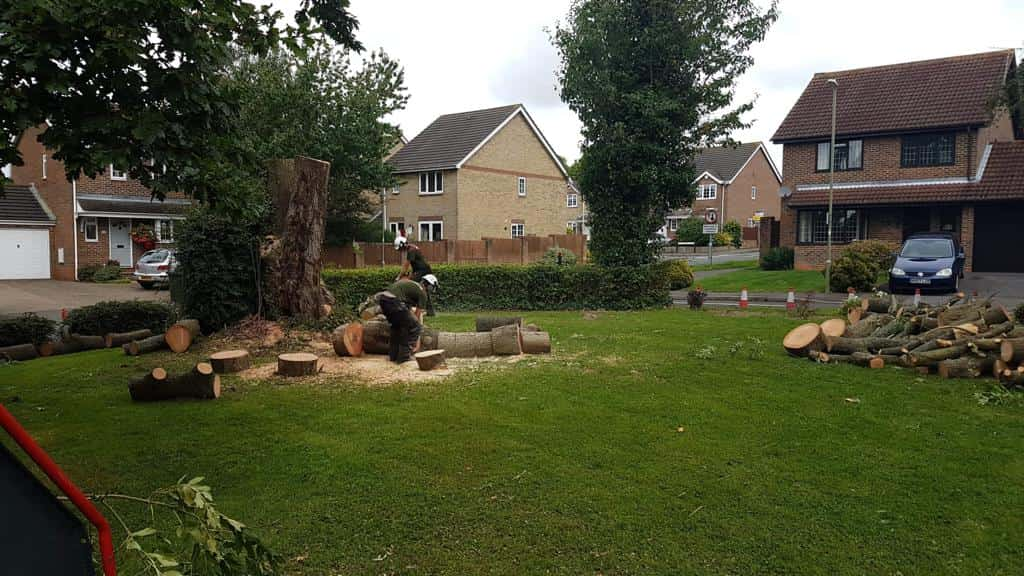
Trees can be one of the most valuable features of a garden, providing structure, character and natural interest. However, as trees mature, their canopies can occupy considerably more space than they once did. Low branches may extend across lawns, dense growth can restrict usable areas, and an unsuitable or unwanted tree can sometimes prevent homeowners from making better use of their garden.
For property owners in Keynsham, Bristol, professional tree surgery can help create a more practical outdoor space without automatically removing every tree that appears to be in the way. Depending on the tree and the intended use of the garden, carefully planned pruning, crown reduction, crown lifting or, where appropriate, tree removal and stump grinding can provide the space required for a patio, lawn or redesigned garden area.
How Can Tree Surgery Create More Usable Garden Space?
The best tree surgery option depends on what is limiting the garden and what the homeowner wants to achieve. A tree with low branches over a lawn requires a different approach from one occupying the exact location intended for a new patio.
Professional assessment is therefore important before work begins. The objective should be to understand how the existing tree affects the space and determine whether selective management can provide the required improvement while retaining suitable trees wherever practical.
Crown Lifting Can Increase Space Beneath a Tree
Low-growing branches can significantly reduce the amount of usable space beneath a mature tree.
They may interfere with walking routes, extend across lawns or make parts of the garden difficult to use comfortably. Where the tree is otherwise suitable, crown lifting can sometimes provide a practical solution.
Crown lifting involves removing selected lower branches to increase clearance beneath the canopy.
This can make the area around the tree feel considerably more open without necessarily reducing the entire crown. It can be particularly useful where the objective is to improve access or recover usable ground beneath an established tree.
Crown Reduction Can Reduce How Far a Tree Extends Into the Garden
Sometimes the problem is not the position of the tree itself but the overall spread of its canopy.
Branches may extend across a large proportion of the garden, reducing the space available around a patio, lawn or other outdoor feature. A carefully planned crown reduction can decrease the overall dimensions of the canopy while retaining an appropriate natural form.
Professional crown reduction is not simply a matter of shortening every branch.
Suitable pruning points need to be selected so that the resulting canopy remains balanced and appropriate for the tree.
Selective Pruning Can Recover Space Without Major Tree Work
Not every garden requires extensive crown management.
Sometimes a limited number of branches are responsible for restricting the area homeowners want to use. Selective pruning can target those branches while leaving the majority of the canopy unchanged.
For example, branches extending directly over a seating area or across an important section of lawn may be assessed individually.
Where appropriate, carefully targeted work can create useful additional space without unnecessarily altering the rest of the tree.
Tree Surgery Can Improve Access Around a Patio
A patio needs more than enough ground area for paving.
The surrounding space should also be comfortable to walk through and use. Low or overextended branches can make a patio feel enclosed, interfere with seating positions or reduce clearance around its edges.
Tree surgery carried out before a patio area is planned can help define how much usable space is realistically available.
This allows the garden layout and tree management to work together rather than attempting to solve conflicts after the outdoor area has already been created.
More Canopy Clearance Can Make a Lawn Feel Larger
A lawn can technically extend beneath a tree while still feeling restricted by the canopy above it.
Low branches can reduce headroom and make mowing or general garden maintenance less convenient. Dense growth extending far into the lawn can also visually divide the available space.
Appropriate pruning can help open the area and create clearer boundaries between the tree canopy and usable lawn.
The result can be a garden that feels more spacious without necessarily increasing its physical dimensions.
Tree Surgery Can Help When Branches Dominate a Seating Area
A tree located near an outdoor seating space can provide valuable character, but excessive growth may eventually dominate the area.
Branches can extend over tables, garden furniture or frequently used walking routes. In these circumstances, selective pruning or crown management may improve the relationship between the tree and the surrounding garden.
The aim does not have to be complete separation.
Well-planned tree surgery can sometimes retain the benefits of the tree while creating enough clearance for the space beneath or beside it to function more effectively.
Creating More Space Does Not Always Mean Felling the Tree
Tree removal is sometimes assumed to be the quickest way of gaining garden space, but it is not always necessary.
If the main problem is low branches or excessive canopy spread, pruning may provide the improvement required while retaining the tree. This can be particularly valuable where the tree remains an attractive and useful feature of the garden.
A professional assessment can identify whether the conflict is caused by the whole tree or only certain parts of its canopy.
Where selective work can achieve the homeowner’s objective, there may be no reason to remove an otherwise suitable tree.
When Might Tree Removal Be the More Practical Option?
There are situations where pruning alone cannot create the required space.
A tree may stand directly within the area intended for a patio or another garden feature, or its position may prevent the wider layout from working effectively. In other cases, the amount of pruning required to retain the tree while achieving the desired clearance may not produce an appropriate result.
Tree removal can then be considered as part of the wider garden plan.
The decision should be based on the tree’s position, condition and relationship with the intended outdoor space rather than simply removing it for convenience without assessment.
Stump Grinding Can Make Previously Occupied Ground More Usable
Removing a tree does not automatically leave a completely clear garden area.
The remaining stump can still occupy valuable ground, interfere with future landscaping and make the space awkward to incorporate into a new layout. This is particularly relevant when a patio, lawn or other usable garden feature is planned around the former tree position.
Stump grinding can reduce the remaining stump below the surrounding surface level.
This helps make the area more practical for subsequent garden improvements, although the intended future use of the ground should be considered when planning the work.
Tree Surgery Can Help Improve the Shape of an Awkward Garden
Sometimes it is not the overall size of a garden that makes it difficult to use but how existing vegetation divides the available space.
A large branch extending diagonally across a garden can interrupt an otherwise useful area. Low growth can make a narrow section feel even more confined, while an oversized canopy can visually dominate a smaller garden.
Selective tree surgery can help create clearer zones.
This can make it easier to define where lawns, patios, paths and planting areas will sit within the overall garden.
Think About How the Garden Will Be Used Before Pruning
Tree surgery is most effective when there is a clear objective.
Simply asking for a tree to be made smaller does not necessarily identify which parts of the canopy are creating the problem. It is more useful to consider how the garden needs to function afterwards.
The homeowner may want more clearance above a lawn, additional room beside a patio, better access through one side of the garden or enough open ground for a redesigned outdoor area.
Understanding the intended use allows the tree surgery to be planned around a practical outcome.
Tree Position Matters as Much as Tree Size
A large tree does not necessarily cause problems simply because of its dimensions.
A mature tree positioned at the edge of a garden may leave plenty of usable ground, while a smaller tree in a central or inconvenient location can have a much greater effect on how the space functions.
Professional assessment should therefore consider where the tree stands in relation to the areas homeowners want to use.
This helps determine whether canopy management is sufficient or whether the tree’s position creates a more fundamental limitation.
Several Trees May Need to Be Considered Together
Gardens containing multiple trees can require a more coordinated approach.
Removing or heavily reducing one tree can change the appearance of the remaining group, while pruning several trees independently without considering their relationship can produce an uneven result.
Where the aim is to recover a larger section of garden, the trees should be considered collectively.
Some may only need selective pruning, others may benefit from crown management, and certain trees may not require work at all.
Avoid Excessive Pruning Simply to Gain Maximum Space
Creating additional garden space does not mean that the maximum possible amount of growth should always be removed.
Overly severe pruning can unnecessarily alter the tree’s natural form and may fail to produce a balanced long-term result. The amount of work should be proportionate to the objective and appropriate for the particular tree.
Professional tree surgery focuses on achieving useful clearance while respecting the structure of the remaining canopy.
This often produces a better result than approaching every tree as an obstacle that needs to be made as small as possible.
Plan Tree Surgery Before Major Garden Changes
Where a substantial patio, lawn or garden redesign is being considered, assessing existing trees early can make the overall project easier to plan.
The eventual spread of retained canopies, required clearances and any tree or stump removal can all influence the usable layout.
Completing appropriate tree work at the planning stage can provide a clearer understanding of the available space before other garden improvements begin.
It also avoids designing an outdoor area around branches or trees that will later require significant changes.
Which Tree Surgery Option Could Be Appropriate?
The appropriate service depends on the specific limitation within the garden. Options may include:
- selective pruning where only particular branches restrict the space;
- crown lifting where additional clearance beneath the canopy is required;
- crown reduction where the overall canopy extends too far into usable areas;
- deadwood removal where unsuitable dead branches are present within an otherwise retained tree;
- tree removal where the position of the complete tree prevents the intended use of the garden;
- stump grinding where a remaining stump occupies ground required for future landscaping.
These methods should not be selected purely according to how much space they create. The tree’s condition, structure and position should determine what work is appropriate.
Professional Assessment Helps Avoid Unnecessary Tree Removal
One of the main benefits of professional advice is establishing whether the desired garden improvement genuinely requires a tree to be removed.
A homeowner may initially believe that felling is the only way to recover space, when crown lifting or selective reduction could provide sufficient clearance. Conversely, repeated heavy pruning may not be appropriate where the tree itself occupies the area needed for a major change.
Assessment provides a clearer basis for the decision.
The objective is to recommend tree work that supports the intended use of the garden without carrying out more intervention than necessary.
Tree Surgery for Garden Improvements in Keynsham, Bristol
At EM Tree Surgery Keynsham, we understand that homeowners often want their gardens to provide more practical space without losing established trees unnecessarily.
By considering the position, condition and canopy of each tree alongside the intended use of the garden, appropriate tree surgery can be recommended. Whether this involves selective pruning, crown lifting, crown reduction, tree removal or stump grinding depends on what will provide a suitable result for the individual space.
For property owners in Keynsham, professional tree surgery can be an important first step when planning a more accessible and usable garden.
Conclusion
Tree surgery can help create more usable space for a patio, lawn or general garden area, but removing the entire tree is not always necessary. Crown lifting can improve clearance beneath low branches, crown reduction can control excessive canopy spread, and selective pruning can address individual branches that restrict important parts of the garden.
Where a tree’s position genuinely prevents the planned use of the space, removal and stump grinding may provide a more practical solution. The best approach depends on the tree and what the homeowner wants to achieve.
If trees are limiting how you use your outdoor space in Keynsham, Bristol, contact EM Tree Surgery Keynsham. We can assess the trees and recommend appropriate work to help create a more practical garden while retaining suitable healthy growth wherever possible.
Call us on: 0117 463 1711
Click here to find out more about EM Tree Surgery Keynsham
Click here to complete our contact form and see how we can help with your tree needs.