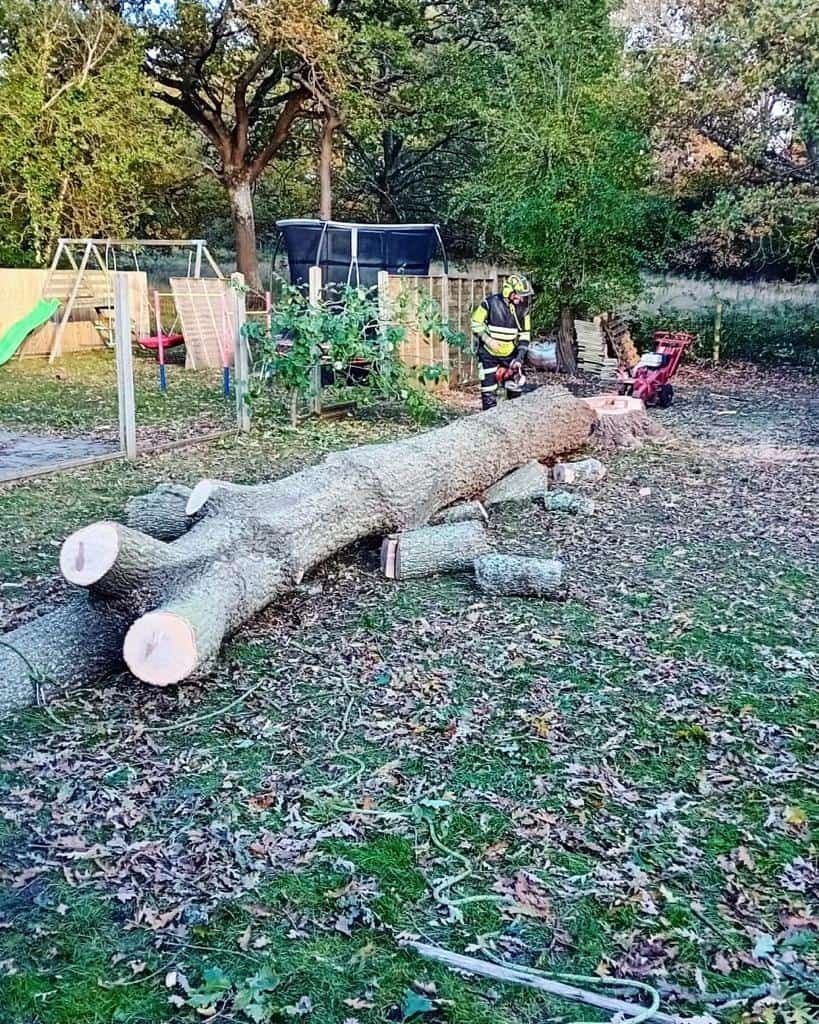
Trees are a valuable and attractive feature in any landscape, providing shade, privacy and environmental benefits. However, there are situations where a tree can become a risk rather than an asset. While many issues can be resolved through pruning, reduction or targeted tree surgery, there are times when complete tree felling becomes the safest and most practical long-term solution.
For property owners in Keynsham, Bristol, understanding when tree felling is appropriate can help protect people, buildings and surrounding land. At EM Tree Surgery Keynsham, we assess trees carefully to determine whether they can be safely retained or whether removal is the most responsible course of action.
Structural Instability in the Tree
One of the most important reasons for considering tree felling is structural instability.
A tree may become unsafe due to:
- Extensive internal decay
- Split or weakened trunks
- Major root damage
- Significant storm damage
- Large sections of dead or dying wood
When the structural integrity of a tree is compromised, it may no longer be able to support its own weight safely, increasing the risk of collapse during adverse weather conditions.
Severe Disease or Infection
Trees can suffer from a range of diseases and fungal infections that gradually weaken their structure.
In some cases, the infection may be contained and managed through careful pruning or treatment. However, when disease has spread extensively throughout the tree, recovery may no longer be possible.
At this stage, felling the tree can prevent the spread of disease to nearby healthy trees and eliminate ongoing safety risks.
Risk to Buildings and Property
Trees located close to homes, garages, boundary walls or outbuildings can pose a significant risk if they become unstable.
Overhanging branches, shifting root systems or leaning trunks may threaten nearby structures. If pruning or reduction cannot sufficiently reduce the risk, tree felling may be recommended to protect the surrounding property.
In Keynsham, Bristol, where many residential properties are positioned near established trees, careful assessment is essential to ensure safety is maintained.
Dangerous Leaning or Movement
A noticeable lean in a tree is not always a problem, as some species naturally grow at angles. However, a sudden or increasing lean can indicate a serious structural issue.
Signs of concern include:
- New or worsening lean over time
- Exposed or lifted roots
- Cracks in the soil around the base
- Movement after strong winds
If a tree shows these signs, it may no longer be stable and could present a significant hazard.
Excessive Deadwood
Deadwood is a natural part of a tree’s life cycle, but excessive amounts can become hazardous.
Large dead branches are more likely to fall during storms or high winds. When a tree contains extensive deadwood throughout its structure, it may indicate overall decline.
In some cases, removal is the safest option when the risk of falling branches becomes too great.
Repeated Storm Damage
Trees that suffer repeated damage during storms may be structurally weakened beyond repair.
While individual damaged branches can often be removed safely, ongoing storm impact can indicate that the tree is no longer suitable for its location. In such cases, removal may be considered the most reliable long-term solution.
Restricted Space and Overcrowding
In some gardens or landscaped areas, trees may simply outgrow their surroundings.
When a tree becomes too large for its location, it may cause issues such as:
- Blocking natural light
- Damaging nearby structures or surfaces
- Interfering with other trees or planting
- Restricting usable outdoor space
If ongoing pruning cannot manage the size effectively, tree felling may be the most practical option.
When Other Tree Surgery Is Not Enough
Tree surgery techniques such as crown reduction, crown thinning or selective pruning can often improve safety and appearance.
However, if a tree continues to pose risks despite these interventions, removal may be the only way to fully eliminate potential hazards.
A professional arboricultural assessment helps determine whether continued management is viable or whether felling is the safest choice.
The Importance of Professional Assessment
Deciding whether to remove a tree is not always straightforward. Trees often have hidden structural issues that are not visible without a detailed inspection.
Professional tree surgeons evaluate the condition of the trunk, branches, roots and surrounding environment before making a recommendation. This ensures that any decision is based on safety, long-term health and practical considerations.
At EM Tree Surgery Keynsham, we provide expert tree assessments and tree felling services throughout Keynsham, Bristol. Our focus is always on safety, responsible tree management and protecting surrounding properties.
Conclusion
Tree felling becomes the safest long-term option when a tree is structurally unstable, severely diseased, repeatedly damaged by storms or posing a risk to nearby property. While many trees can be preserved through careful maintenance, there are situations where removal is the most responsible and secure solution.
For property owners in Keynsham, Bristol, EM Tree Surgery Keynsham offers professional tree assessments and safe tree felling services tailored to each situation. If you are concerned about the condition of a tree on your property, seeking expert advice can help ensure the right decision is made for both safety and long-term landscape health.
Call us on: 0117 463 1711
Click here to find out more about EM Tree Surgery Keynsham
Click here to complete our contact form and see how we can help with your tree needs.